
Beyond potential: Who benefits from the development of Northern Australia
Northern Australia is rich with opportunity. And the challenge for this and coming generations of First Peoples is ensuring that its development creates lasting economic value for the people and communities of the North.
That was one of our strongest reflections following the 2026 Developing Northern Australia Conference (DNAC) in Mparntwe (Alice Springs). Throughout the conference, there was considerable discussion about the investment required to realise the North’s potential – from housing and infrastructure to workforce, major projects, agriculture, defence, and regional development.

For First Nations Economics (FNE), however, there is a more fundamental question laying beneath those conversations. As investment in Northern Australia accelerates, who will own, shape and benefit from the economic value it creates? And who is willing to create new systems of economic governance that works for our communities, not against them?
Those questions matter, particularly for Aboriginal and Torres Strait Islander peoples. Across much of Northern Australia, First Nations peoples make up almost 30% of the population[1], with registered rights and interests over 78% of the land mass[2]. Yet despite this, First Peoples are too often positioned as passive stakeholders in Northern development, rather than as economic influencers and decision makers with a direct stake in its future, and the keys to unlocking its potential.
Moving from participation to ownership
For decades, the policy conversation led by governments has focused heavily on increasing First Nations participation in the economy. Employment, procurement and business participation remain important as ever, but the conversation now needs to go further. It must go to the next level and base itself in truth.
The truth is, participation does not necessarily create ownership, and economic activity does not automatically create intergenerational wealth. At DNAC, Kynan Barnes from Kings Narrative challenged delegates to consider development through a longer-term lens. Who benefits, where does Aboriginal ownership sit, how does development strengthen culture and community, and what remains “for the child not yet born”?
That is a powerful economic test that needs to be better articulated in policy.
For FNE, self-determination must extend into economic decision-making and power brokering. First Peoples need to be involved from the inception, from the outset, with the authority and opportunity to shape development and share meaningfully in the economic value it creates.
The ambition cannot simply be to create a place for Aboriginal and Torres Strait Islander people within somebody else’s economic model or frameworks, such as the ones imported by the English and thrust upon First Peoples. It should be to strengthen the ability of First Peoples to build, own and shape economic activity, and the frameworks that govern those activities, themselves and for their communities.
This is central to FNE’s work. We work alongside First Nations communities to ensure they have the economic evidence to influence decisions, make the case for investment and negotiate from a position of greater strength. It is one way we are working to shift First Peoples from being consulted on economic development to having greater authority in determining what that development looks like.

Recognising the economic strength already there
This also requires us to change the way First Nations economies are understood.
Too often, economic conversations about Aboriginal and Torres Strait Islander communities begin with disadvantage. We only need to look at Closing the Gap as a campaign to see its foundation in the deficit. Structural inequality is real and must be addressed, but when disadvantage becomes the primary lens, it can obscure the considerable economic strength that already exists within First Nations communities.
The Blak Print Report presented by the NT Indigenous Business Network at DNAC provided a compelling challenge to that narrative. The modelling estimated Aboriginal businesses contribute $3.4 billion to Gross Territory Product, support approximately 11,500 jobs and generate around $843 million in government revenue. It also identified significant further growth potential from expanding the Aboriginal business economy.
The significance is not simply in the numbers but in what they tell us about where future economic policy should focus. First Nations businesses are already a significant part of the Northern economy, and strengthening that economic base should be viewed as a growth strategy for the North, rather than simply an Indigenous participation initiative.
We saw the potential of this approach during FNE’s recent visit to Canada, where Indigenous enterprise is increasingly recognised as an important contributor to the broader economy. NACCA estimates that the Indigenous business activity it has supported has contributed more than C$13billion to Canada’s GDP and supported 181,000 jobs[3]. And all of this at a time when governments themselves didn’t have confidence in the framework they were investing in.
The scale is different, but the lesson for Northern Australia is relevant: investing in the growth of First Nations enterprise can generate significant economic returns while strengthening the economic position of First Peoples within the regions where that growth occurs.
Development must leave value behind
Northern Australia will continue to attract significant investment. The measure of success should not simply be how much capital enters a region, but how much economic capability remains there as a result.
Major projects can generate substantial expenditure while allowing much of that value to leave through external ownership, imported labour and supply chains based elsewhere.
A stronger model of development, and we only have to look at Canada’s First Nations Major Projects Coalition to see, is one that builds enduring local economic capability and ensures more of the value created continues to circulate within communities long after an individual project has finished.
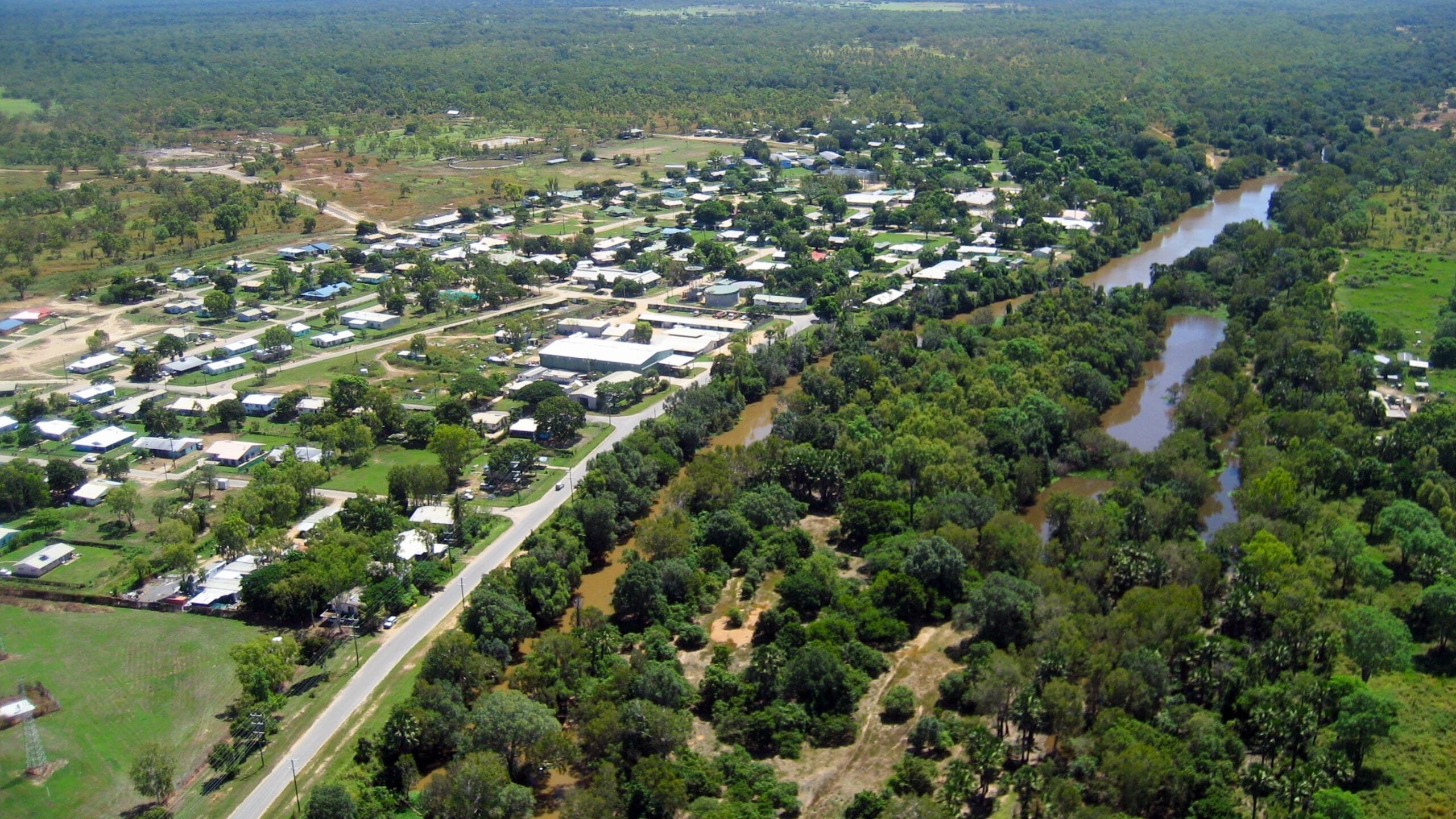
Housing is an important example. DNAC discussions repeatedly connected housing shortages with workforce attraction, business growth and access to essential services. Housing in Northern Australia is therefore not simply a social issue; it is economic infrastructure that enables communities to participate in and benefit from growth.
The same principle applies to the workforce. Northern Australia needs to attract workers, but it must invest just as deliberately in the people already there. A question from the DNAC floor challenged delegates to consider exactly that, particularly the existing and often invisible workforce within remote and regional communities.
This is particularly relevant to First Peoples. Building the North’s future workforce should not be about filling immediate labour shortages, but about creating conditions for people already living in Northern communities to strengthen their economic position over the longer term.
This is an approach we are putting into practice through FNE’s Nyami Balmuun (Strong Women) platform, which supports First Nations women to build their economic capability and pursue greater opportunities through business, education and leadership. The value of this investment goes beyond just immediate participation. When individuals are better equipped to start businesses, advance their careers, and make informed economic choices, these skills remain with them and benefit their communities. Similar to how physical infrastructure fosters future investments, investing in people enhances the economic foundations essential for the North’s future growth.
A different measure of Northern development
Ultimately, the development of Northern Australia needs a broader definition of economic success.
We should absolutely measure investment, employment and economic growth. But we should also be asking how much local and First Nations ownership has increased, whether businesses have grown, whether capability remains locally and whether communities have greater economic resilience and opportunity because development occurred.
Importantly, First Peoples must have authority in determining those measures. The data used to describe communities, justify investment and evaluate outcomes shape economic decisions. Indigenous Data Sovereignty is therefore as much an economic issue as it is a data or governance issue. If we are to measure Northern development differently, First Peoples must have a say in defining success and determining how that success is measured.
Northern Australia does not need to keep proving that opportunity exists. It is already evident in the North’s economic and cultural strength.
The challenge is ensuring the next wave of Northern development does more than generate economic activity. It must build First Nations ownership, strengthen local economies and create economic value that remains long after individual investments and projects have ended.
The opportunity is to build a Northern economy where First Peoples move beyond participation to having genuine authority over development and a greater share in the economic value it creates, now and for future generations.
- [1] Australian Bureau of Statistics, Estimates of Aboriginal and Torres Strait Islander Australians, 30 June 2021
- [2] Australian Government, Office of Northern Australia, Northern Australia – Quick Facts. Indigenous rights and interests cover 78% of Northern Australia’s land mass.
- [3] National Aboriginal Capital Corporations Association (NACCA), Our Impact. NACCA – Our Impact